2025
ZTE unveiled its new vision and new mission, accelerating the strategic transformation from "connectivity" to "connectivity + computing".
New vision: "To lead in connectivity and intelligent computing, enabling communication and trust everywhere".
New mission: "To create an intelligent future with digital innovation, an excellent growth platform for employees, and greater value for customers, shareholders, and stakeholders across the globe".
ZTE has ranked second worldwide in the shipments of both 5G base stations and 5G core network products for six consecutive years, while also securing the second place in global market share of fixed network products.
2024
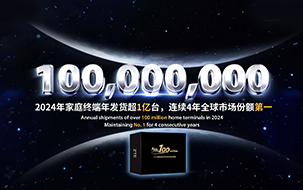
ZTE's home information terminals ranked first in global market share for the fourth consecutive year with over 100 million annual shipments. The shipments of FTTR and mobile Internet products both surpassed 10 million, and 5G FWA & MBB products ranked first in global shipments.
2023
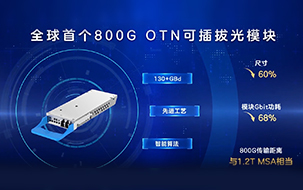
ZTE launched the Real 400G solution and achieved a record-breaking transmission distance of 5,616 km over the existing networks. The same year, the company launched the world's first 800G OTN pluggable module supporting C+L bands, leading the industry in terms of capacity and integration level.
2022
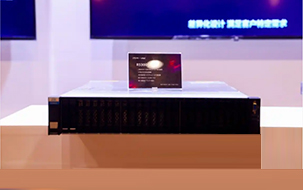
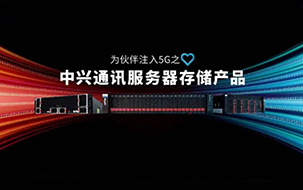
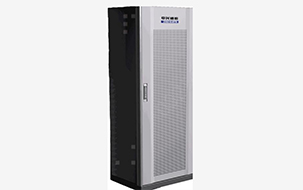
ZTE's servers ranked among the top 5 in terms of revenue in the Chinese market, with the largest shipments in the telecom industry and fast-growing revenue from over one billion to nearly ten billion Chinese yuan.
2021
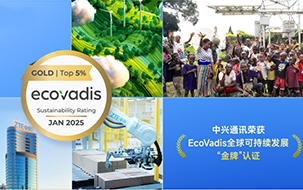
In 2021, ZTE formulated the dual-carbon strategy and launched projects, putting in place a comprehensive sustainable development system. Subsequently, the company joined SBTi, earned a place on CDP's "A List" for leadership in climate action, obtained the EcoVadis Gold Medal, and won the Distinguished Contribution Award at the World Internet Conference.
2020
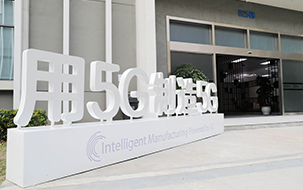
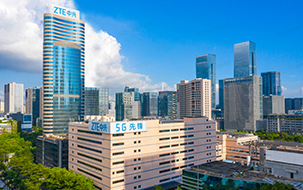
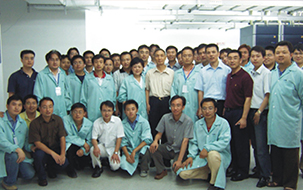
ZTE Global 5G Intelligent Manufacturing Base began production, pioneering "Intelligent Manufacturing Powered by 5G". By then, the company had established five intelligent manufacturing bases, respectively located in Shenzhen, Xi'an, Changsha, Heyuan, and Nanjing. In 2024, ZTE Global 5G Intelligent Manufacturing Base was honored as the first five-star 5G factory in China.
2017
ZTE positioned 5G as a core focus of its strategic development, and launched the brand slogan "Leading 5G Innovations". In the same year, ZTE released a full series of pre-commercial 5G products and solutions, consolidating its leadership in 5G innovations.
2016
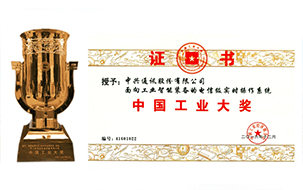
The carrier-grade real-time operating system developed by ZTE for intelligent industrial equipment won the China Grand Award for Industry, the highest award in China's industrial sector. A total of 200 million units of the operating system had been shipped to and deployed in over 160 countries and regions.
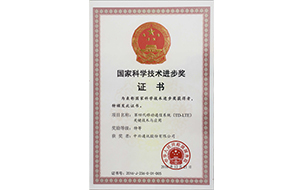
The company was conferred the Special Prize of the State Scientific and Technological Progress Award for the TD-LTE project, with seven ZTE experts on the honor roll.
2015
ZTE's operating revenue exceeded CNY100 billion for the first time.
2013
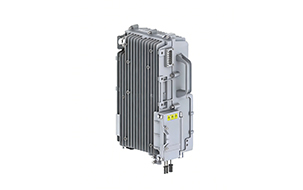
ZTE officially launched the industry's first miniaturized, high-power 2T4R RRUs. Among these, the ZXSDR R8862A was a star model for 2G, 3G, and 4G networks, with a cumulative shipment of over 3 million units, becoming the company's best-selling RAN product worldwide.
2011
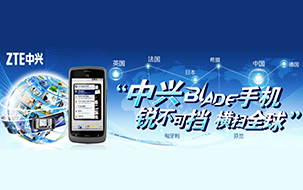
The ZTE Blade 880 series smartphones became global bestsellers, especially in Europe, the Asia-Pacific region, and China, with the sales of a single model exceeding 10 million units.
2010
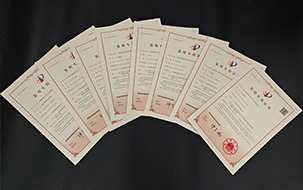
ZTE ranked first in the number of invention patent applications in China. In 2011, ZTE's PCT applications rose to first place among global enterprises for the first time, and then remained among the world's top 3 for six consecutive years.
2009
GSM products generated CNY11.8 billion in annual sales, becoming ZTE's first product to exceed CNY10 billion in sales. Meanwhile, the annual market share of GSM products increased by 20%, ranking among the top three globally.
2008
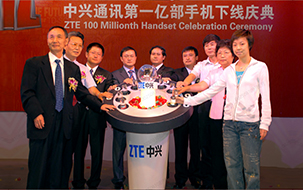
The cumulative sales volume of ZTE mobile phones exceeded 100 million units.
2005
In 2005, ZTE successfully made the first TD call in China. In 2006, ZTE commissioned the first BBU+RRU distributed base station, which fundamentally solved the engineering complexity and lowered costs of TD antennas. This marked a notable milestone in the TD industry.
2004
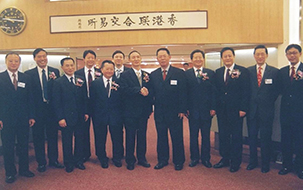
ZTE was successfully listed on the Main Board of the Hong Kong Stock Exchange, becoming the first Chinese company to issue both A shares and H shares. This was regarded as a milestone in China's securities industry and economy in that year.
2003
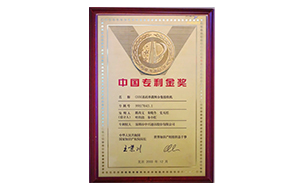
ZTE won the China Patent Gold Award for a single-carrier-frequency diversity receiver of the GSM base station, becoming the first company in Guangdong province to win the award.
2002
ZTE's operating revenue exceeded CNY10 billion.
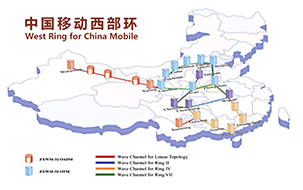
ZTE won China Mobile's bid for the transport network project (Phase I) in western China, the world's largest DWDM project then covering over 20,000 km across 18 provinces and cities. This was also the only DWDM system deployed by a Chinese vendor for China Mobile.
2001
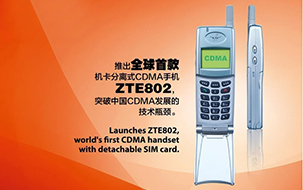
ZTE launched the ZTE 802, the world's first CDMA mobile phone with a removable card, overcoming the technological bottleneck in China's CDMA development.
In 2001, ZTE commissioned PHS pilot sites in Guangxi and Qinghai. In 2003, PHS products accounted for 30%-40% of the company's total annual sales.
2000
ZTE put the integrated access network into large-scale commercial use, securing a 40% market share in China.
1999
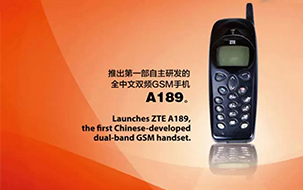
ZTE successfully developed China's first GSM mobile phone with independent intellectual property rights, the ZTE 189, a dual-band mobile phone supporting Chinese language.
1998
ZTE won a turnkey project in Pakistan with a contract amount of USD95 million, which was the largest overseas communications engineering project won by a Chinese telecom equipment vendor at that time.
1997
ZTE Corporation was founded and went public on the Shenzhen Stock Exchange, becoming the first listed company among China's major telecom equipment manufacturers.
1996
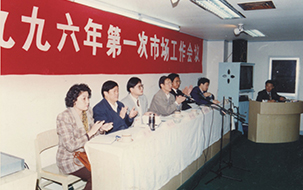
In its first marketing conference in 1996, ZTE mapped out the strategy of "three transformations", namely, transformation from switches to diverse product portfolios, transformation from rural to urban market, and transformation from domestic to international markets.
1995
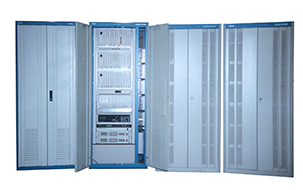
In March, the ZXJ10, a large-capacity digital SPC switching system, was commissioned successfully in Sheyang County, Jiangsu Province. In November, the ZXJ10 was granted the network access license by the Ministry of Posts and Telecommunications, and rated by expert reviewers as "the best model comparable to first-class models in the world".
1993
In March, the carrier-grade digital switch ZXJ2000 was successfully developed. In November, the ZXJ2000 obtained the network access license from the Ministry of Posts and Telecommunications as one of the first batch of China-made carrier-grade digital switches.
Zhongxingxin Telecommunications Equipment Co., Ltd. was founded with the joint investment from Xi'an Microelectronics Technology Institute, Aerospace Guangyu, and Zhongxing Weixiantong Telecom Equipment Co., Ltd., pioneering a mixed-ownership operating model.
1991
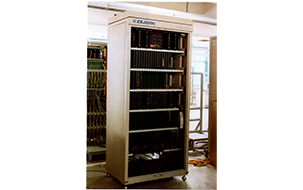
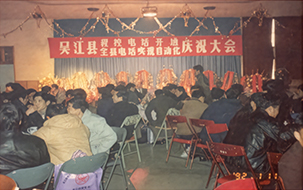
The ZX500A, a 500-line carrier-grade digital switch designed for rural areas of China, was successfully developed and put into use in a town of Jiangsu province. This marked the entry of China-made switches into the rural market, sparking a wave of telecom reform in rural areas across the country. Since then, ZTE has embarked on its journey as a telecom equipment manufacturer.
1989
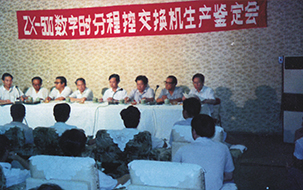
The ZX-500 was successfully developed, becoming the first China-made digital SPC switch with independent intellectual property rights.
1986
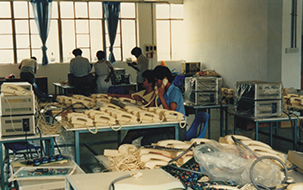
In 1986, the ZX60 was successfully developed. In July 1987, the company passed the technical verification and obtained the network access license for the ZX60, which became China's first SPC switch with independent intellectual property rights.
1985
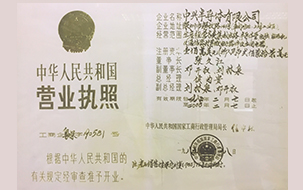
On February 7, Shenzhen ZTE Semiconductor Co., Ltd. was established.












.png)

.png)

.png)

.png)
Sustainability
Shaping Digital Innovation for a Sustainable Future
Anchored in our vision "To Enable Connectivity and Trust Everywhere," Our sustainability strategy focuses on three key foundational aspects within the company: internal controls, compliance, and talent development. By strengthening core competencies and aligning with the 17 United Nations Sustainable Development Goals (SDGs) and industry trends, we have identified five key sustainable development strategic priorities, aiming to contribute to global sustainable development initiatives.
Learn MoreSustainability Reports
ZTE has been releasing sustainability reports for 16 consecutive years.
Learn MoreEnvironmental Protection
ZTE focuses on green innovation to pave a green digital path by promoting green operations, green supply chain, green digital infrastructure, and green empowerment, contributing to net zero emission.
Learn MoreSocial Contribution
As a Driver of Digital Economy, ZTE is dedicated to leveraging digital intelligence to foster value beyond commercial interests and achieving the vision“To Enable Connectivity and Trust Everywhere.”
Learn MoreCorporate Governance
ZTE has always been putting emphasis on strengthening corporate governance, focusing on internal control, compliance, social credibility and BCM to build a highly resilient organization.
Learn More