ZTE and CSE Sign LOI to Establish the Center for Excellence in Engineering Capacity Building in Vietnam
- Share:
-


-


-


- ZTE and the Chinese Society of Engineers (CSE) signed a Letter of Intent to establish the Center for Excellence in Engineering Capacity Building (Hanoi, Vietnam), marking a milestone in China-Vietnam ICT engineering talent cultivation
- The center will focus on cutting-edge technologies such as 5G, AI, and computing power networks, aiming to drive digital transformation and industrial upgrading in Vietnam and surrounding ASEAN countries
Beijing, China, July 13, 2026 - ZTE Corporation (0763.HK / 000063.SZ), a global leading provider of integrated information and communication technology solutions, today announced that the launching ceremony for the establishment of the Center for Excellence in Engineering Capacity Building (CEECB) (Hanoi, Vietnam) was successfully held in Beijing. During the event, the Chinese Society of Engineers (CSE) and ZTE jointly signed a Letter of Intent (LOI) to establish the CEECB.
Leaders and experts from the China Association for Science and Technology (CAST), CSE, the China Institute of Communications (CIC), and ZTE attended the ceremony. The launch of this joint initiative marks a solid step forward in promoting the mutual international recognition of engineering and technical personnel qualifications, providing strong support for the digital transformation of Vietnam and surrounding ASEAN countries.
In June 2025, CSE and ZTE began preparations for the CEECB. Leveraging Vietnam's young talent pool as a pivot, the project will extend its reach to other ASEAN countries, such as Cambodia and Laos. Focusing on cutting-edge technological directions including 5G, AI, and computing power networks, the project aims to promote the popularization of 5G and next-generation communication technologies in the ASEAN region. The initiative will foster a collaborative talent cultivation ecosystem through university-enterprise and government-enterprise partnerships, thereby driving digital transformation and industrial upgrading in Vietnam and neighboring countries.
To date, CSE and ZTE have completed preliminary research and program design. The training curriculum will emphasize practical, hands-on learning in areas including 5G network deployment, AI application development, and computing power network architecture, incorporating project-based training and real-world case studies. Moving forward, both parties will leverage their respective strengths in engineering capability evaluation, international mutual recognition mechanisms, R&D, and localized operations to advance curriculum development, faculty training, training environment setup, and alignment with international certifications.
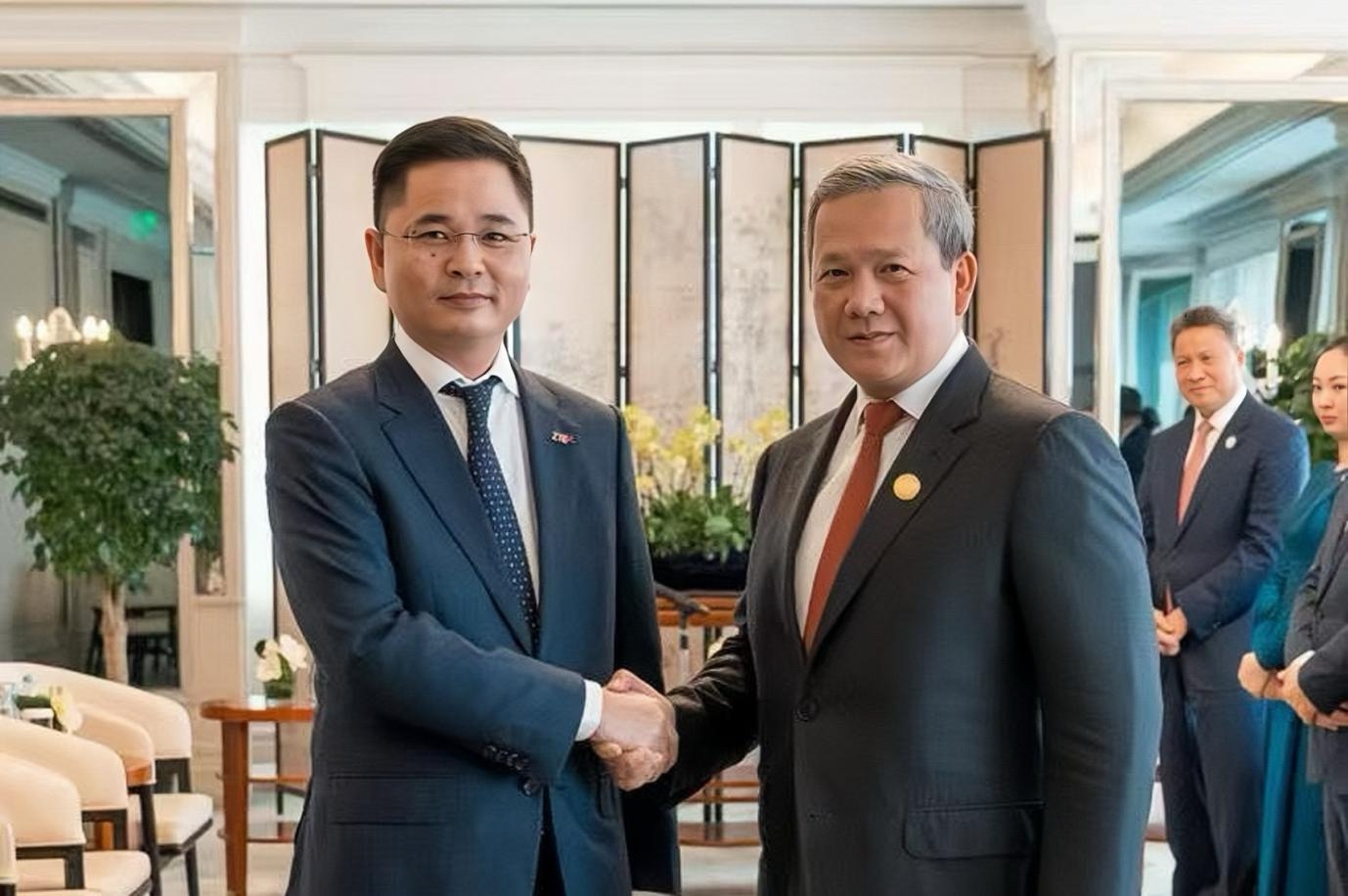
Zhao Kai, Managing Director of ZTE Vietnam Engineering Service Office, introduced that in recent years, ZTE has continuously deepened the construction of the local talent ecosystem. The company has established university-enterprise partnerships with several key local universities, conducting joint lectures, internships, faculty training, and campus recruitment, thereby creating a robust "industry-education integration" model.
Sun Fangping, Senior Vice President and President of Global Services at ZTE, stated: "Talent is the cornerstone of sustainable enterprise development, and ZTE has always regarded talent cultivation as a core strategy. Since 2025, under the guidance of CAST/CSE and CIC, ZTE has successfully hosted two editions of the Engineering Capacity Building Program in Nanjing and Shenzhen, attracting over 140 senior engineers from organizations such as the Institution of Engineering and Technology (IET) and the South African Institute of Electrical Engineers (SAIEE). This has established a preliminary high-level platform for international technical exchanges." He also stated that the signing and launch of the CEECB represents another important step in ZTE’s global capability co-construction efforts. ZTE will continue to leverage its localization advantages to deepen multinational collaboration, and strengthen knowledge sharing and the export of technical standards. By constructing the CEECB with high standards, ZTE aims to continuously enhance the international influence of Chinese engineering technologies, helping Chinese standards and wisdom better go global, and contributing more strength to global digital development.
Wang Shurui, Director-General of the CAST Center for Professional Training and Services and Executive Deputy Secretary-General (Designate) of the Chinese Society of Engineers, highlighted that the joint construction of capability centers by CSE and enterprises aims to share China's engineering experience, showcase Chinese engineering technologies, products, and equipment, and improve the skills of both Chinese and international engineers through civil sci-tech and cultural exchanges, thereby better serving the global development of enterprises. He expressed hope that CIC and ZTE will leverage their professional expertise to promote China-Vietnam sci-tech and cultural exchanges through the center. He encouraged them to deepen bilateral cooperation in engineering capability building, establish a localized talent cultivation ecosystem, set a benchmark for overseas capability building for Chinese high-tech enterprises, and contribute to the "Going Global" strategy of Chinese ICT technologies, standards, and talent.
Looking ahead, CSE and ZTE will continue to deepen their partnership, aiming to establish the center as a leading hub for communication technology innovation and high-end talent cultivation in Southeast Asia. This initiative will continuously inject new momentum into the regional digital economy and support a more inclusive, sustainable, and intelligent future.



.png)

.png)

.png)

.png)