From Bit-Centric to Token-Centric Operations, ZTE Redefines Fixed Network Business Value in the AI Era
- Share:
-


-


-


- From "Bit Business" to "Token Business": As CaaS nears its value limit, operators must shift from moving bits to monetizing AI tokens — selling measurable AI outcomes via "Results-as-a-Service" (RaaS)
- With AI-ready cloud-edge-device networks and home AI hubs, operators can turn every home into a virtual data center, selling recurring intelligent services beyond broadband
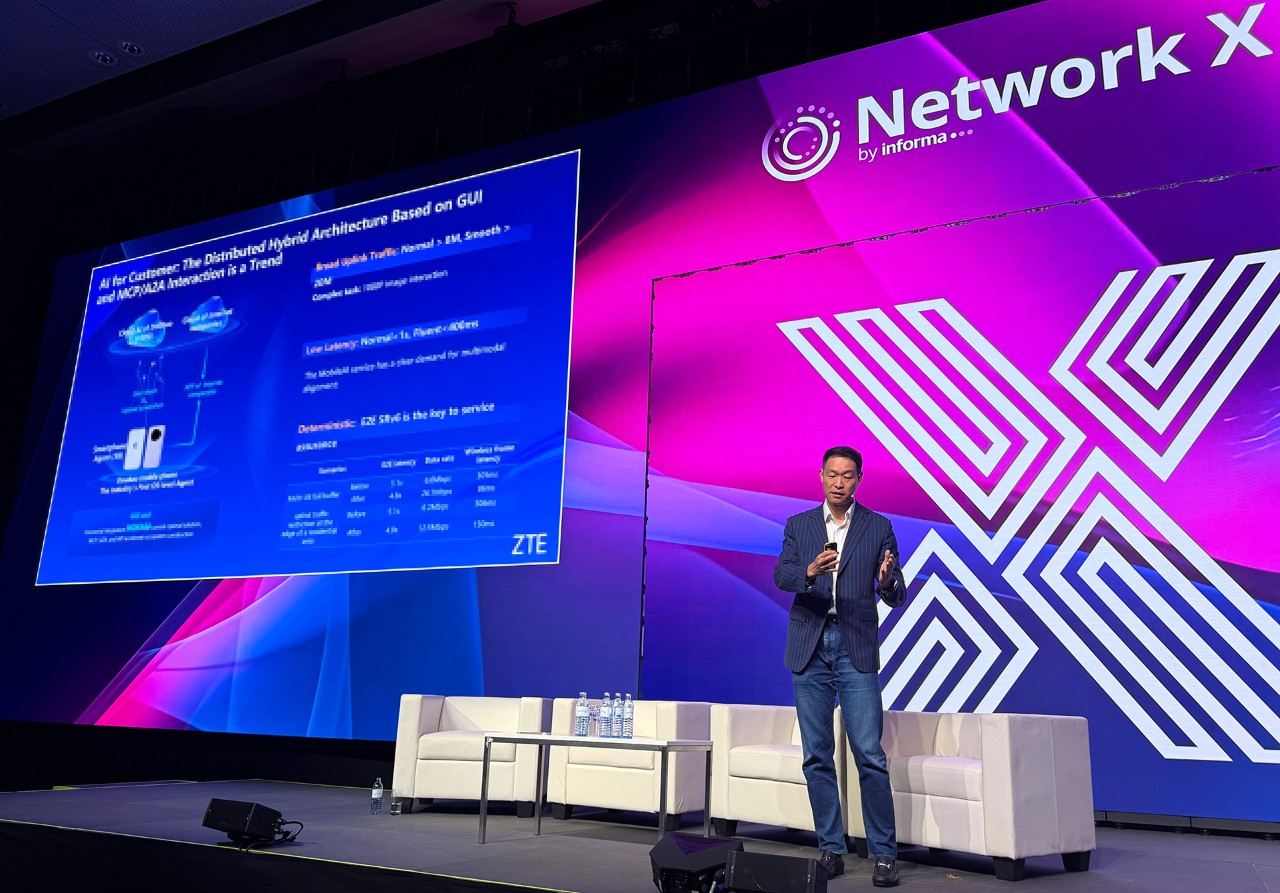
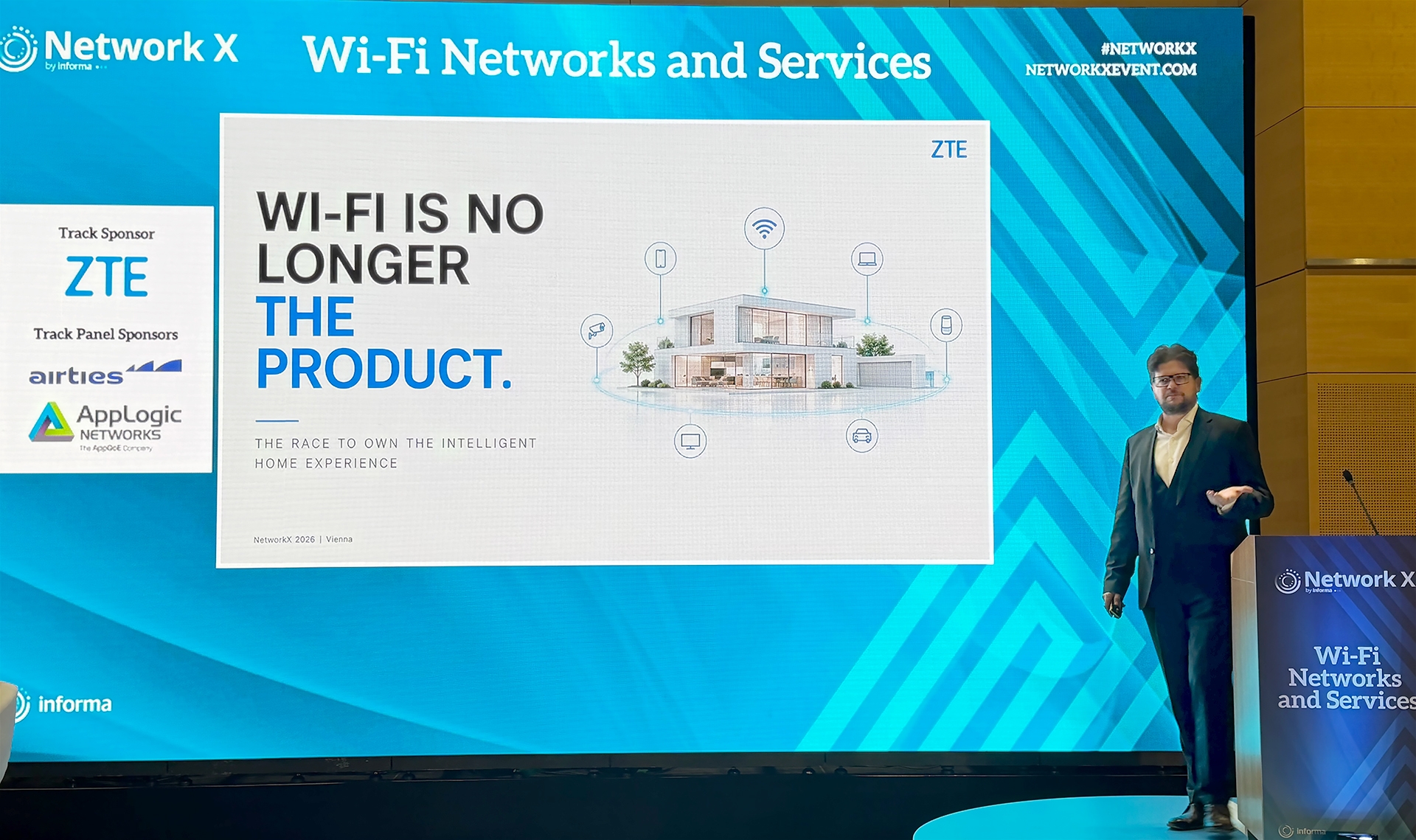
Vienna, Austria, October 21, 2026 — ZTE Corporation (0763.HK / 000063.SZ), a global leading provider of integrated information and communication technology solutions, showcased its latest fixed-network innovations at Network X 2026. During the event, Peter Hu, Vice President of ZTE, called on global fixed-broadband operators to rethink the industry's growth model as AI agents move from concept to mass deployment. In a keynote titled "From Bit Business to Token Business: Reshaping Fixed-Network Operations", Hu noted that connectivity will increasingly be valued not by traffic alone, but by the intelligence it enables and monetizes.
Peter Hu said: "Bits are traffic. Tokens are intelligence. The incremental value of traffic is declining. Tokens are the hard currency of the AI era – directly monetizable." He added: "Connectivity is the foundation of this new world, and AI is the core. Our job is to make networks truly designed for tokens."
From CaaS to RaaS: A New Value Equation
For the past decade, fixed broadband grew on a proven "connectivity-as-a-service" model, with ARPU driven mainly by bandwidth, traffic and subscriber numbers. FTTx users rose from about 300 million in 2015 to roughly 1.2 billion in 2025, while household penetration reached 50.8% and download speeds increased nearly 13-fold. That model has taken the value of basic connectivity close to its limit.
In the AI era, the customer is no longer only the human user. It is also the intelligent agent. Connectivity must evolve from moving bits to orchestrating, serving and monetizing AI tokens. The future value equation becomes "results-as-a-service", or RaaS: ARPU is driven by bandwidth, traffic and tokens, multiplied by users – and layered with new dimensions such as scenarios, agents and concurrent tasks.
This is more than a technical upgrade. It is a new revenue model. Operators can move beyond selling access and begin selling measurable AI outcomes.
Operators Can Become the Super Hub of the Token Economy
Across the AI token value chain – production, transmission and application – operators hold advantages that equipment vendors and OTT players do not have in the same way: networks, applications and ecosystem integration.
With a massive subscriber base and end-to-end connectivity, operators can support both the production and delivery of AI tokens. They can also aggregate AI services and agents through their customer touchpoints, making them an indispensable "super hub" in the emerging token economy.
AI for Customers: A Strategic Window for Operators
On the customer side, AI is shifting toward hybrid device-cloud architectures. On-device agents will work with powerful cloud models to handle complex tasks, from voice and image understanding to real-time interaction. This creates three hard requirements for networks: strong uplink, low latency and deterministic performance.
These requirements are not limited to smartphones. They apply to any AI agent scenario, from smart devices to smart homes. For fixed-broadband operators, this is a strategic opportunity to differentiate through AI-ready cloud-edge-device networks — turning connectivity into a platform for monetizable AI experiences.
AI for Homes: Every Home Becomes a Virtual Data Center
In the home, ZTE sees the operator's strongest recurring AI opportunity. Hu said every home will eventually become a virtual data center, powered by a "Home AI Agent".
This vision rests on four pillars: a large existing subscriber base that serves every family member; multimodal interaction through voice, image and touch; AI capabilities that drive devices while protecting privacy and security; and open ecosystem collaboration with device makers and large-model providers.
In practice, ZTE envisions a smart display or AI FTTR as the home's intelligent hub, with the Co-Claw agent platform as the engine and cameras, sensors and other connected devices as the home's nerve endings. Cross-brand interoperability through standards such as Matter enables coordinated services including device control, video analysis, security protection and home data management.
The result is a new wave of home services: smart home control, elderly and child care, home security, AIGC creation and eventually energy management and local lifestyle services. The operator's relationship with the home no longer ends at a broadband connection. It becomes a daily, recurring smart-service relationship — helping operators shift from selling broadband subscriptions to selling incremental intelligent services.
An AI-Ready Network Built for the Token Era
To make this shift possible, networks must be built with connectivity as the foundation and AI at the core. ZTE is advancing an integrated cloud-edge-device infrastructure that can support large-scale AI computing, efficient connections between distributed AI data centers, and AI-ready all-optical access.
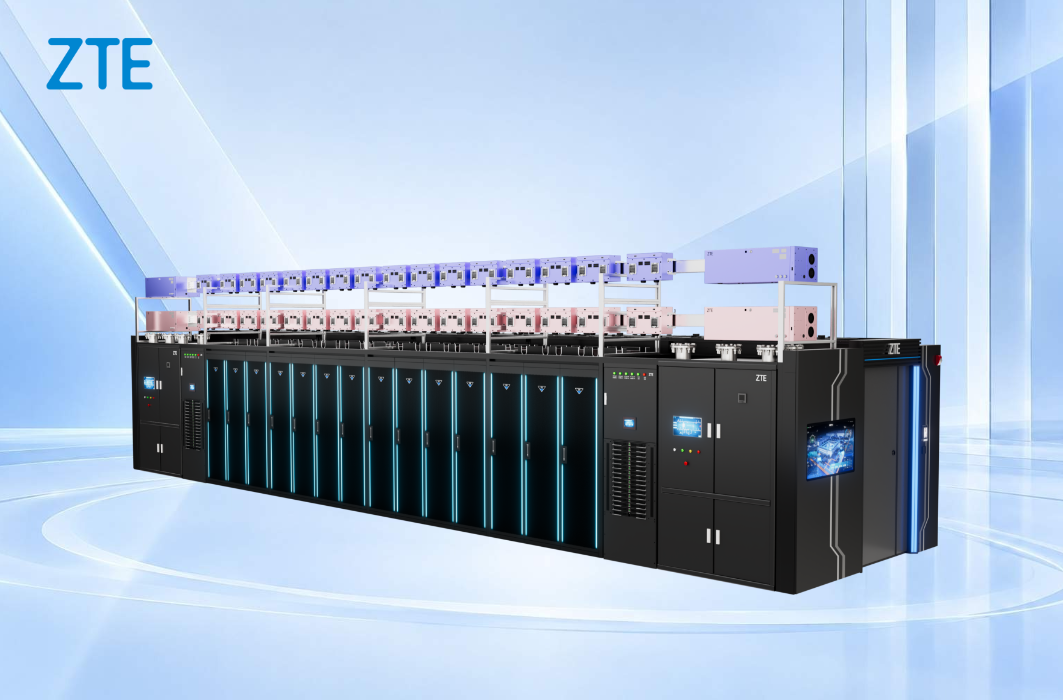
For example, ZTE's next-generation data-center networking prototype has demonstrated significant reductions in latency and power consumption, helping AI clusters scale more efficiently. Its optical innovations are designed to connect distributed computing resources with high capacity, low latency and lossless transmission. At the access layer, AI-powered FTTR, OLT and OTN technologies provide deterministic experiences and proactive operations for the coming era of 10-gigabit and AI services.
"AI is no longer just an application on top of connectivity — it is redefining connectivity itself." said Hu, "As a continued leader in global fixed networks, ZTE will keep empowering networks with AI-native capabilities and work with operators worldwide to seize the opportunity of the shift from bits to tokens – upgrading broadband from a network that connects to an intelligent value network that can think, serve and monetize."