ZTE CDO Cui Li at GTI Summit 2026: Co-Creating an Intelligent, Ubiquitous 6G Future and Exploring New Opportunities in the Mobile AI Era
- Share:
-


-


-


- AI is redefining the mission of mobile networks: to enable reachable intelligence, guaranteed experiences, and monetizable services
- ZTE is building stronger 6G network capabilities to fuel ubiquitous intelligence
- With real-world practices, ZTE aims to create more value for the industry
- ZTE will partner with GTI to accelerate mobile AI and 6G convergence
- ZTE is committed to co-creating the Internet of Agents, making connectivity smarter and intelligence more trustworthy
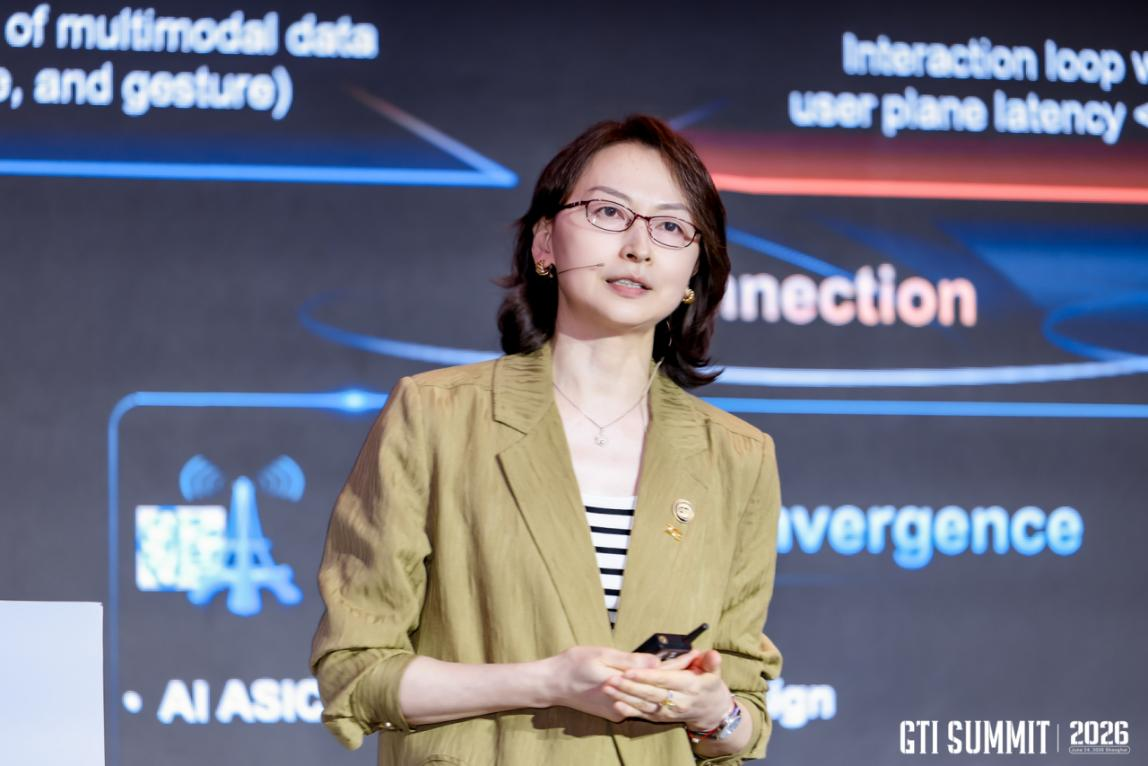
Shanghai, China, June 25, 2026 - ZTE Corporation (0763.HK / 000063.SZ), a global leading provider of integrated information and communication technology solutions, announced that Cui Li, the company's Chief Development Officer, was invited to deliver a keynote speech at GTI Summit 2026, themed "Mobile AI Powering 6G Future". Under the title "Co-Creating an Intelligent, Ubiquitous 6G Future", she shared ZTE's strategic insights, key priorities, and innovative practices in 6G.
Cui Li noted that, as AI becomes more powerful and pervasive, agent-driven connections are set to grow exponentially. This signals that mobile AI is redefining network value, moving from "connectivity" to "reachable intelligence, guaranteed experiences, and monetizable services". To truly support agent services in the mobile AI era, ZTE believes that network capabilities must be improved across four key dimensions: enhanced uplink, ultra-low latency, deterministic experience, and ubiquitous coverage. To this end, ZTE has established a "2+4" framework for key 6G technologies—the "2" strategic priorities are 6G+AI convergence and Space-Air-Ground Integrated Network (SAGIN), and the "4" evolution directions are ultimate spectral efficiency, AI massive connections, integrated sensing-communication-computing-intelligence, as well as trustworthiness and security.
Cui Li also stated that 6G development requires scenario-driven innovation and real-world validation to transform key technologies into replicable and scalable industry value. To create more value for the industry, ZTE has been focusing on high-value scenarios. To date, the company has achieved a series of technology breakthroughs, made significant progress in field trials, and strengthened collaboration across the ecosystem—playing an active role in advancing the maturity of the 6G industry.
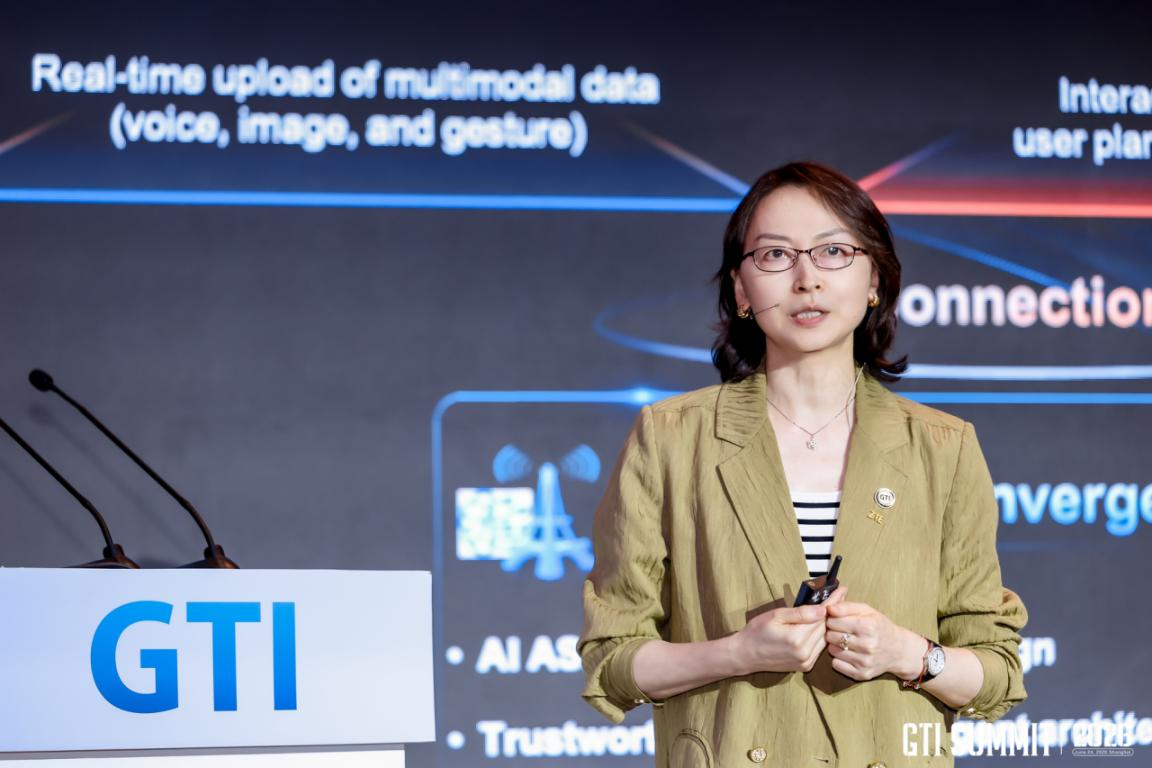
As emphasized by Cui Li, ZTE has long been a participant in GTI, providing substantial support for mass adoption of 5G-A, urban pilot projects, joint validation in OpenLab, and ecosystem co-building. In the new phase of mobile AI and 6G convergence, ZTE is committed to continuing this journey with GTI and global partners, pursuing collaborative innovations in the following four key directions:
First, new network capability research. To address brand-new requirements such as agent communication, token flow scheduling, and continuous cross-domain experience assurance, ZTE will explore protocol architectures and resource management mechanisms adaptive to the AI-native era.
Second, cost-efficient AI-RAN architecture. ZTE adopts a decoupling design for "AI for RAN" and "RAN for AI", allowing the two to evolve in synergy. A combination of AI ASICs (mandatory) and xPUs (optional) strikes a balance between performance, energy efficiency, and TCO, delivering optimal cost-efficiency.
Third, TN-NTN integration testing. The company is exploring the deployment of typical scenarios including D2C satellite connectivity, low-altitude UAV networking, and emergency communication, validating the service orchestration and seamless handover of space-terrestrial integrated networks.
Fourth, scenario-based application validation. ZTE launches joint pilot projects in frontier fields such as embodied AI, AI glasses, in-vehicle AI, and industrial agents, truly bringing technology into the real world.
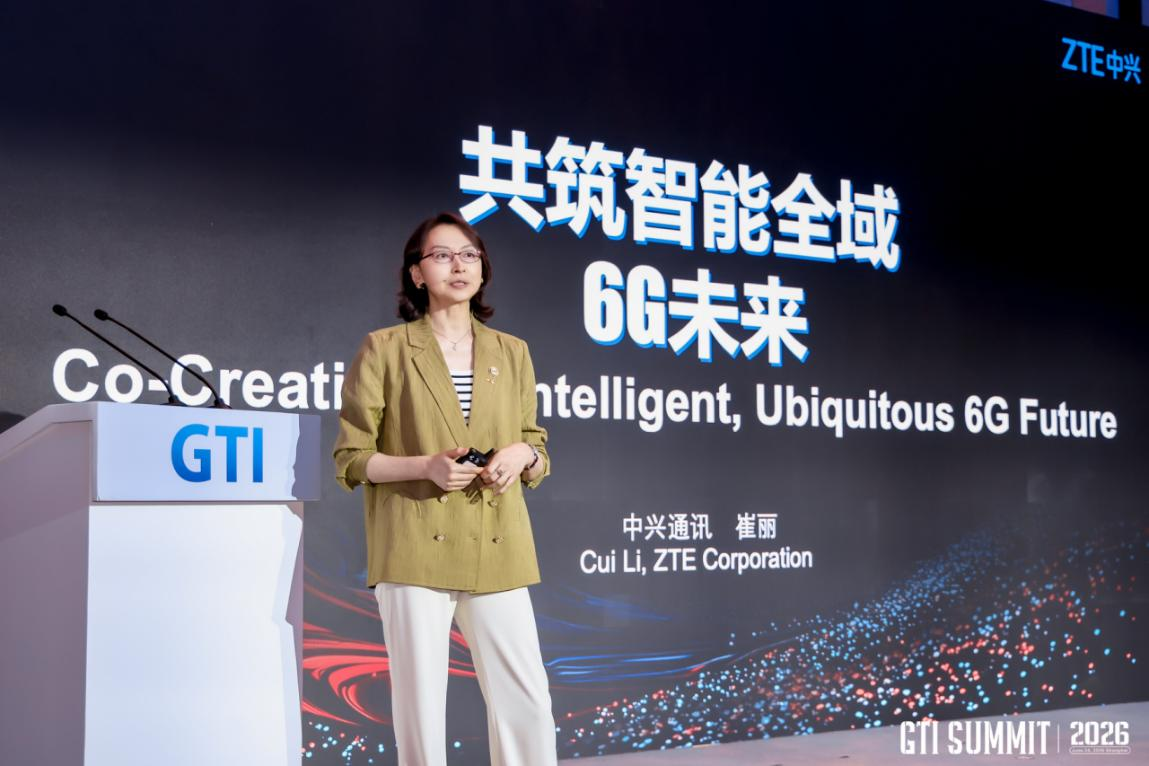
At the end of her speech, Cui Li expressed ZTE's commitment to joining hands with GTI and global partners to drive mobile AI and 6G from a common vision to large-scale adoption.


.png)

.png)

.png)

.png)