China Telecom, SRIBD, ZTE and Eye Hospital of WMU Launch Intelligent Patient Escort Service with 5G-A Smart Wheelchair
- Share:
-


-


-


- The intelligent patient escort service has been put into live clinical use in Eye Hospital of WMU at Hangzhou
- It is the industry’s first application of 5G-A smart wheelchair to in-hospital patient escort, carrying patients safely and smoothly through every stop from arrival to departure
Zhejiang, China, November 13, 2026 – ZTE Corporation (0763.HK / 000063.SZ), a global leading provider of integrated information and communication technology solutions, together with China Telecom Zhejiang, Shenzhen Research Institute of Big Data (SRIBD) and Eye Hospital of Wenzhou Medical University (WMU) at Hangzhou, has launched an intelligent patient escort service with 5G-A smart wheelchairs, opening a new path for 5G-A and inclusive AI in healthcare.
According to the hospital, its ophthalmology services see a large share of elderly patients and children, as well as people with visual impairment and other disabilities. More than 30% of patients cannot independently complete the complex, multi-stage care journey — registration, pre-examination, medical consultation, subsequent condition-specific examinations, payment, treatment and medicine collection — and rely heavily on family members or dedicated escorts.
To address the shortage of escort resources, China Telecom Zhejiang has worked with Shenzhen Research Institute of Big Data, ZTE and Eye Hospital of Wenzhou Medical University (WMU) to integrate AI into clinical workflows, aiming to elevate patient experience and streamline operations.Together, the four parties have jointly rolled out the intelligent patient escort service powered by 5G-A smart wheelchairs at the hospital’s Hangzhou campus.
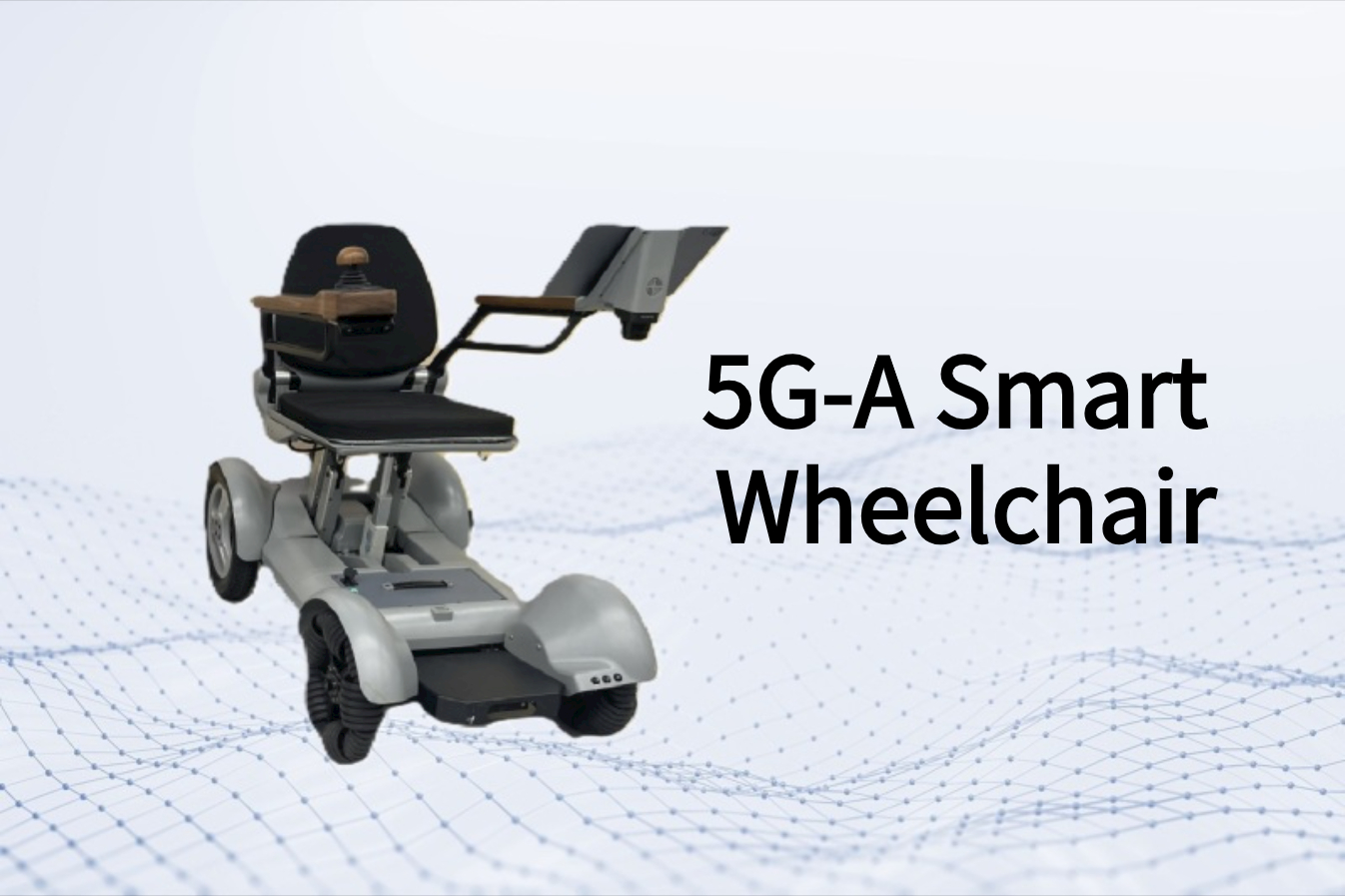
Based on the hospital’s existing clinical workflow, the solution integrates smart wheelchairs, 5G-A networks and cloud-based escort intelligence. For patients, the smart wheelchair is both an autonomous mobility terminal and an embodied front end: it transports patients safely and, through natural-language interaction, provides triage guidance and conversational support. On the cloud side, an agent orchestrates the full care pathway — consultation, examinations, payment and pharmacy services — drawing on a general LLM and a dedicated medical LLM. The 5G-A network underpins the service in two ways: deterministic, low-latency transmission between wheelchair and cloud for real-time interaction, and meter-level positioning for precise navigation across floors and buildings.
The system is now deployed across three outpatient floors with 15 smart wheelchairs. On arrival, patients scan a QR code to activate a wheelchair and describe symptoms in natural language on the on-board tablet; the system matches the appropriate department. Once the appointment is confirmed, the wheelchair navigates autonomously through registration, ophthalmic pre-examination, specialist consultation, special examinations, follow-up and medicine collection, re-planning routes and adjusting schedules as needed. Since deployment this year, the smart wheelchairs have served nearly 2,000 patient visits. The average visit duration fell from 180 minutes to 120 — a reduction of one-third; wrong-department re-bookings dropped by 10%; and overall outpatient efficiency improved by more than 10%.
The deployment demonstrates how the solution innovatively integrates 5G-A deterministic networking with embodied AI terminals, LLMs and agent-based orchestration in patient escort scenarios, empowering patients with mobility limitations. Moving forward, the partners plan to extend the solution beyond the hospital — to elderly care facilities, urban parks and transport hubs — so that seniors and people with limited mobility can access public services with greater independence and dignity. This reflects a shared commitment to making AI more inclusive and accessible to all.